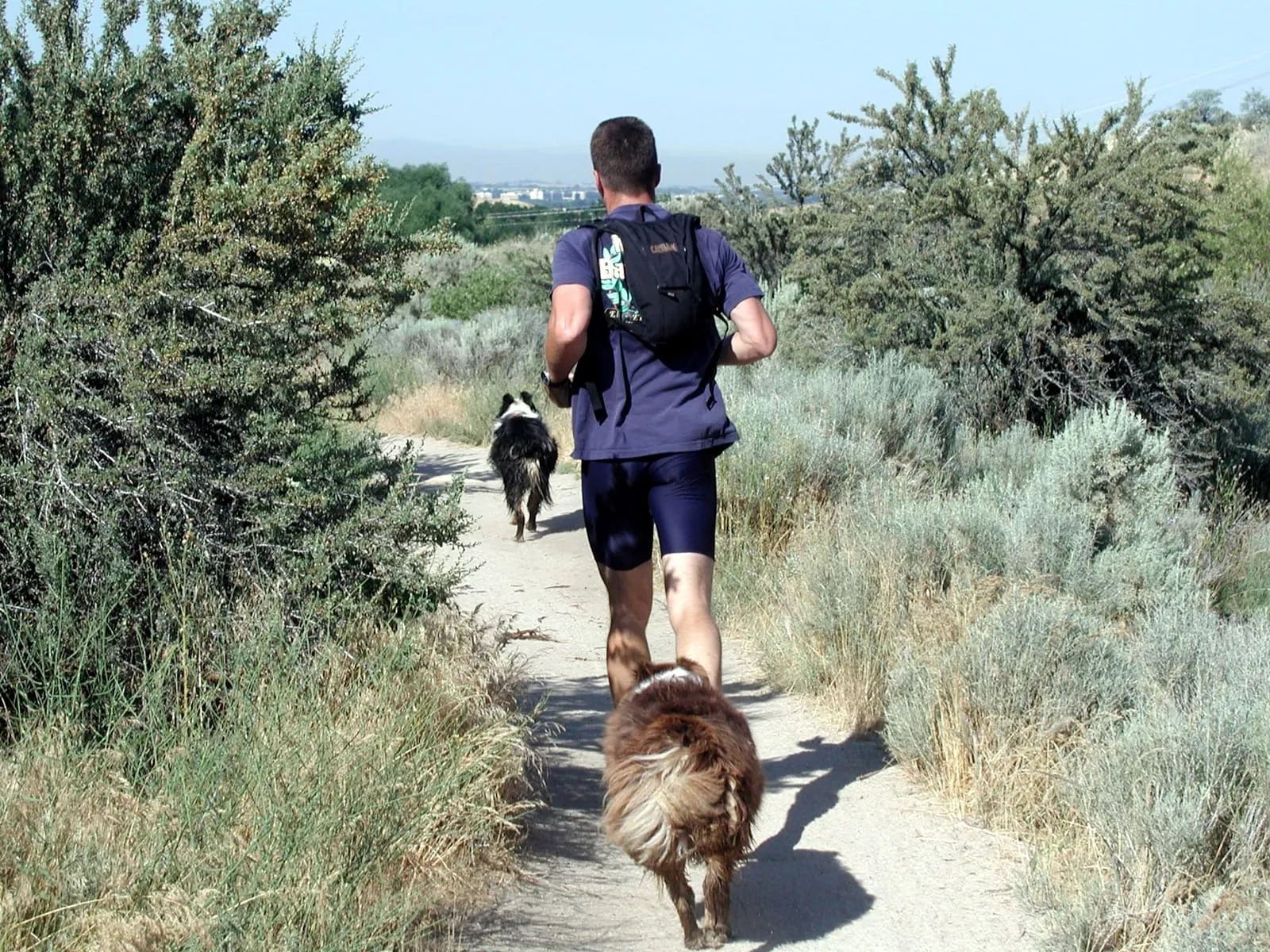

Short answer: Beginners in Idaho can start with easy, free hikes at City of Rocks National Reserve, Boise foothills trails, where you turn back if you leave tracks in mud, and winter snowshoeing at Craters of the Moon.
Think hiking season in Idaho is over? Think again.
Winter’s coming, and that’s not a reason to stop. It’s a reason to try something new. Frozen foothills trails at sunrise. Snowshoes on a lava field. Then, when spring hits, City of Rocks. Here’s how to start in any season, and how to keep going all year.
At a glance
- Boise foothills rule
- Leaving tracks in mud? Turn back [3]
- City of Rocks National Reserve
- No entrance fee; easy hikes generally under 3 miles [4][5]
- Craters of the Moon Loop Road
- Typically closed to cars mid-Nov. to mid-April; ski or snowshoe it [7]
- Craters of the Moon entry in winter
- Free while the Loop Road is closed to cars [7][8]
- Craters of the Moon entry, rest of year
- $20 a vehicle or $10 a person, 7 days [8]
- Loaner snowshoes at Craters
- Separate suggested $5 donation a pair, Thu-Mon when the visitor center is open [7]
Plan your week
| Moderate minutes brisk walk, easy bike | Vigorous minutes run, hard hike, class | Strength | |
|---|---|---|---|
| Mon | |||
| Tue | |||
| Wed | |||
| Thu | |||
| Fri | |||
| Sat | |||
| Sun |
Based on the federal Physical Activity Guidelines for adults: 150 minutes of moderate activity a week (each vigorous minute counts as two), plus muscle-strengthening on at least 2 days. Check with your doctor before starting a new exercise plan, especially if you have a health condition. Plug in the free Idaho spots from this guide.
Boise: start in the foothills
Ridge to Rivers is the City of Boise’s foothills trail system, run with partners including the Bureau of Land Management, Ada County, the U.S. Forest Service and Idaho Fish and Game [1]. Its advice to families and new hikers is exactly what we’d tell you: start with short, flat trails and work up [2]. Its family-friendly pick is Hulls Pond Loop #34 [2]. Pull it up on the Ridge to Rivers interactive map and go.
Now the foothills rule every Boise hiker learns: “If you are leaving tracks, turn back” [3]. Ruts left in mud can freeze hard and make the trail dangerous once it dries [3]. So in winter [3]:
- Go early in the morning, when trails are most likely to be frozen.
- Hike only on trails that are frozen or dry.
- Walk straight through short muddy patches instead of around them; stepping off trail kills plants and widens the path.
- Check the condition reports before you leave home.
Turning around isn’t quitting. It’s how you protect the trails you’ll love all spring.
For the paved Boise River Greenbelt and the Idaho State Parks Passport, see our guide to free workouts in Idaho.
City of Rocks: free, and built for first-timers
City of Rocks National Reserve doesn’t charge an entrance fee [5]. (Castle Rocks State Park next door charges $7 per vehicle per day [5].)
The reserve says its easy hikes are generally under 3 miles with gentle inclines, good for families and casual walkers [4]. Pick up a trail map at the visitor center or in the NPS app, or call 208-824-5901 to ask which trail suits you [4].
The reserve’s own packing advice is spot on for a first-timer [6]:
- At least 20 ounces of water, more on warm days, plus a way to treat water.
- Layers, including a rain jacket and a warm layer.
- Sun protection: sunglasses, sunscreen and a hat.
- Make noise so you don’t surprise wildlife.
- Stay on established trails.
Craters of the Moon: a winter adventure
From mid-November to mid-April, the Loop Road at Craters of the Moon typically closes to cars and turns into a winter trail [7]. If you’ve never snowshoed, this is a great place to try:
- Get in free. There’s no entrance fee while the Loop Road is closed to vehicles [7][8]. Winter might be the best deal in the park.
- Borrow snowshoes at the visitor center when it’s open, Thursday through Monday, 9 a.m. to 2:30 p.m., for a suggested $5 donation per pair. That’s a donation for the snowshoes, separate from entry. Return them by 3:30 p.m. [7]
- Stay on the cinder cones, and don’t cross the lava flows [7].
- Snowshoe beside the ski tracks, not on them. Keep to the far right going out and the far left coming back [7].
- Ranger-led snowshoe hikes run weekends from late January through February: about 2 hours, ages 8 and up, reservations required, 25 people max [7].
Before grooming starts, the road may be open to hiking and leashed dogs [7]. Once grooming begins, pets aren’t allowed on the Loop Road [7]. The marked Snowshoe Trail is about 1 mile but moderately strenuous [7], so save it for your second or third outing.
Snowshoeing takes more effort than a regular walk. Start with a short stretch of the Loop Road when conditions allow. Take short steps, give yourself room for a slightly wider stance, and enjoy the quiet.
| Pass | Price | Good for |
|---|---|---|
| Private vehicle | $20 | 7 consecutive days |
| Per person (foot or bike, 16+) | $10 | 7 consecutive days |
| Youth 15 and under | Free | - |
| Craters of the Moon annual pass | $35 | 1 year through the month of purchase |
Check the park’s current conditions page for the Loop Road’s status and visitor center hours before you drive out [13]. Dates shift with the snow, so let the park tell you, not the calendar.
What to bring
Use the National Park Service’s Ten Essentials as your checklist: navigation, sun protection, extra clothing, illumination, first-aid supplies, fire, a repair kit and tools, nutrition, hydration and emergency shelter [9]. In an Idaho winter, extra clothing and illumination move to the top: days are short, and the temperature drops fast once the sun goes down.
Gear that helps
You don’t need equipment for any of the trails above. If you want a little help, these are inexpensive and widely used. We chose them from the makers’ listings; we haven’t tested them ourselves.
Best for: Knees on the way down
Black Diamond Trail Trekking Poles (Pair)
A pair of adjustable aluminum poles that take strain off knees on descents and add balance on rocky or muddy beginner trails. [10]
- Aluminum shafts, sold as a pair [10]
- FlickLock one-handed length adjustment [10]
- Dual-density foam grips with extended choke-up section [10]
- Interchangeable carbide Tech Tips; rubber tips sold separately [10]
Watch out: Rubber tips for pavement are sold separately.
See it on Amazon → We chose it from specs and safety records; we haven't tested it ourselves.
Best for: Carrying water on longer hikes
CamelBak Fourteener 26 Hydration Pack
A day-hike pack with a built-in water reservoir, so you can drink on the move and carry layers, snacks and a first-aid kit. [11]
- Fourteener 26 hiking pack with hydration reservoir [11]
- Air Support ventilated back panel [11]
- Dual wing hip belt with cargo storage [11]
- Adjustable sternum strap, stretch overflow pocket [11]
See it on Amazon → We chose it from specs and safety records; we haven't tested it ourselves.
Best for: Hikes that might run past sunset
Petzl Tikkina Headlamp
A simple, light headlamp to keep in the pack in case a hike runs past sunset. [12]
- Wide, even beam for close-up and at-your-feet lighting [12]
- Single-button operation, tilting lamp plate [12]
- Comes with 3 standard batteries; also takes Petzl CORE rechargeable battery [12]
- Removable, washable headband made from recycled materials [12]
See it on Amazon → We chose it from specs and safety records; we haven't tested it ourselves.
Your first Idaho hike, step by step
- Choose your season’s trail: frozen foothills in Boise now, snowshoes at Craters this winter, City of Rocks in spring.
- Check conditions the night before.
- Dress in layers you can take off and put back on.
- Bring water, at least 20 ounces, even when it’s cold.
- Start short. Thirty minutes is a win.
- Follow the rules of the trail: muddy means turn back, lava means stay off.
- Write down how it felt. Next time, add ten minutes.
Idaho doesn’t hibernate, and neither do you. Get out there.
Sources
- Ridge to Rivers (City of Boise and partners)
- Ridge to Rivers, Family friendly hikes
- Ridge to Rivers, Wet weather and winter trail use
- National Park Service, City of Rocks National Reserve hiking
- National Park Service, City of Rocks National Reserve fees
- National Park Service, City of Rocks hiking safety
- National Park Service, Craters of the Moon in winter
- National Park Service, Craters of the Moon fees and passes
- National Park Service, Ten Essentials
- Amazon listing: Black Diamond Trail Trekking Poles (Pair)
- Amazon listing: CamelBak Fourteener 26 Hydration Pack
- Amazon listing: Petzl Tikkina Headlamp
- National Park Service, Craters of the Moon current conditions
Common questions
What's a good first hike in the Boise Foothills?
Ridge to Rivers, the City of Boise's foothills trail system, lists Hulls Pond Loop #34 as a family-friendly hike and recommends starting with short, flat trails and working up. Check its condition reports first: if you're leaving tracks in mud, turn back.
Does City of Rocks National Reserve charge an entrance fee?
No. The National Park Service says City of Rocks National Reserve does not charge an entrance fee. Neighboring Castle Rocks State Park charges $7 per vehicle per day. City of Rocks says its easy hikes are generally under 3 miles with gentle inclines.
Can you hike Craters of the Moon in winter?
Yes, on snow. The Loop Road typically closes to vehicles from mid-November to mid-April and becomes a route for skiing and snowshoeing. There's no entrance fee while the Loop Road is closed to vehicles. Separately, when the visitor center is open, it lends snowshoes Thursday through Monday, 9 a.m. to 2:30 p.m., for a suggested $5 donation per pair. Check the park's current conditions page for road status and hours before you go. Before grooming starts, the road may be open to hiking and leashed dogs.
How much does Craters of the Moon cost?
In winter, nothing: the National Park Service charges no entrance fee whenever the Loop Road isn't fully open to cars, roughly November through April depending on weather. The rest of the year it's $20 per private vehicle or $10 per person on foot or bike, each good for 7 consecutive days. Youth 15 and under are free, and a Craters of the Moon annual pass is $35. Loaner snowshoes are a separate suggested $5 donation, not an entrance fee.
Cite this guide
"Beginner Hiking in Idaho: First Trails in the Boise Foothills, City of Rocks and Craters of the Moon, Including Winter." BestIdaho (Formula 9501 LLC). Updated November 26, 2026. https://bestidaho.org/idaho-beginner-hiking-trails/
Free to quote with a link back. Facts are sourced; see Sources above.
See something wrong? Tell us
Get the BestIdaho update
New guides, deadlines and rule changes for Idaho, about twice a month. Free. Unsubscribe anytime.
We'll email you a link to confirm. We use your email only for this newsletter, published by Formula 9501 LLC. See our privacy page and how we make money.